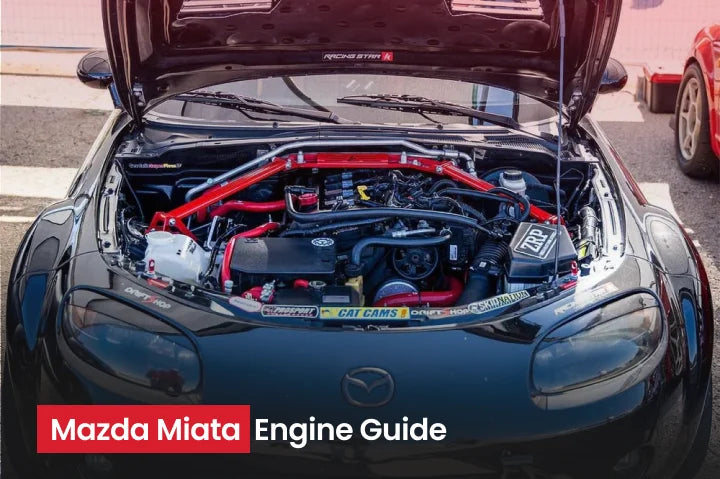
The Mazda Miata has used four main engines across four generations: the B6 1.6L in early NA models, the BP 1.8L in later NA and all NB models, the LF 2.0L in the NC, and the Skyactiv-G 2.0L in the current ND. All four are four-cylinder, naturally aspirated engines built to rev. Here is what you need to know.
What Engine Does a Miata Have? Engines by Generation
The Miata, officially the MX-5, has been in production since 1989. Four generations in, Mazda has kept the same formula: small displacement, naturally aspirated, rear-wheel drive. Each generation received a new engine but kept the lightweight, driver-focused character the car is known for.
NA Miata Engine: B6 1.6L and BP 1.8L
The first-gen NA Miata ran from 1989 to 1997. Early NA models from 1989 to 1993 used the B6 1.6L four-cylinder. It made 116 horsepower and around 100 lb-ft of torque. Light, simple, and free-revving, the B6 suited the skinny NA chassis perfectly. The car was so light that 116 hp never felt underpowered.
From 1994 to 1997, Mazda moved to the BP 1.8L engine. Power jumped to 128 hp and 110 lb-ft of torque. The extra displacement filled in the mid-range and made the car easier to drive fast on the street without always chasing high RPM.
NB Miata Engine: BP 1.8L and BP VVT
The second-gen NB Miata (1999-2005) kept the BP 1.8L. Early NB1 models from 1999 to 2000 used the same BP from the late NA. In 2001, Mazda introduced the BP-VVT for the updated NB2. Variable valve timing pushed output to 142 hp and brought smoother throttle response across the rev range. The NB2 BP-VVT is widely considered the best version of the Mazda BP engine Mazda ever built. It revs cleanly, pulls hard mid-range, and responds well to bolt-on mods like an intake and exhaust header.
NC and ND Miata Engines: LF 2.0L and Skyactiv-G
The NC Miata (2006-2015) was heavier, so it needed a bigger engine. Mazda fitted the LF 2.0L four-cylinder, making between 158 and 167 hp depending on model year. Smooth and torquey, but lacking the high-revving character of the older BP engines.
The fourth-gen ND Miata (2016-present) uses the Skyactiv-G 2.0L, producing 155 to 181 hp. High compression, direct injection, and strong fuel economy for a sports car. The Skyactiv is Mazda’s most technically advanced Miata engine, but also the hardest to swap due to complex engine management and direct injection.
|
Generation |
Years |
Engine |
Displacement |
Horsepower |
Torque |
|
NA |
1989–1993 |
B6 |
1.6L |
116 hp |
100 lb-ft |
|
NA |
1994–1997 |
BP |
1.8L |
128 hp |
110 lb-ft |
|
NB1 |
1999–2000 |
BP |
1.8L |
128 hp |
110 lb-ft |
|
NB2 |
2001–2005 |
BP VVT |
1.8L |
142 hp |
122 lb-ft |
|
NC |
2006–2015 |
LF |
2.0L |
158–167 hp |
140 lb-ft |
|
ND |
2016+ |
Skyactiv-G |
2.0L |
155–181 hp |
148 lb-ft |
Mazda B6 vs BP Engine: 1.6 vs 1.8 Miata Engine Compared
The B6 vs BP debate is one of the most talked-about topics in the Miata community. Here is how they compare.
The B6 1.6L is lighter by about 20 lbs. It revs faster, sounds more frantic at the top of the range, and is simpler to work on. If you want to turbocharge a Miata on a budget, the B6 handles boost well. The main downside is less mid-range torque, meaning you work the gearbox more to stay in the power band.
The BP 1.8L makes more torque across the RPM range. Easier to live with day-to-day and better on the highway. The VVT version from 2001 to 2005 is the standout of the entire BP family. Better throttle response, stronger top-end pull, and ages well even at high mileage. It is also the more popular engine for swaps because good used examples are easy to find.
For track days and autocross, the B6 has a loyal following because of its lighter weight and screaming top end. For a street Miata you want to enjoy for years, the BP is the smarter call. Either engine is a solid foundation for a build and holds its value well in the Miata community.
Browse all available units in our Mazda engines collection.
Are Miata Engines Reliable? Common Problems by Engine
Yes, Miata engines are genuinely reliable. Here is what to watch by engine:
B6 1.6L:
-
Cam angle sensor failure on high-mileage units
-
Valve cover gasket leaks after 100k miles
-
Head gasket seep at very high mileage
BP 1.8L:
-
Timing belt tensioner wear is the main concern; replace the belt every 60k miles
-
VVT solenoid clogging on NB2 models if oil changes are skipped
-
Crankshaft position sensor failure on some high-mileage units
LF and Skyactiv-G:
-
LF can run warm in heavy stop-and-go traffic if the cooling system is neglected
-
Skyactiv-G builds up carbon on intake valves, a known direct injection issue
-
Both are otherwise low-drama engines
The number one killer for any Miata engine is deferred maintenance. Stay on top of oil changes, replace the timing belt on schedule, and these engines will run well past 200,000 miles.
Miata Engine Swap Options: JDM BP Swap Kits and Beyond
The Miata swap scene is one of the most active in the import world. Most popular options:
-
B6 to BP swap: Drop a BP 1.8L into a B6 NA chassis. Everything fits with minor modifications. Many experienced DIYers finish it in a weekend.
-
BP VVT swap: Same setup but with the NB2 engine. More horsepower, smoother delivery. The top pick for NA owners wanting a meaningful power bump without major fabrication.
-
Turbocharged BP: Many builders add a small turbo to a BP and run 200 to 300 hp on the stock block with the right supporting parts. One of the most cost-effective performance builds on this platform.
-
K-series or LS swaps: High power, but these change the weight balance significantly. Better suited for dedicated track builds.
Our 1990-1993 NA Miata B6 plus 5-speed swap kit includes the engine, five-speed transmission, and ECU in one package.
Buying a JDM Miata Engine and Transmission Swap
JDM-sourced Miata engines are a smart buy. Japan sold the Miata domestically as the Eunos Roadster, using the same B6 and BP engines. Japan’s strict vehicle inspection system, known as Shaken, pushes owners to sell early when inspection costs get high. That means JDM engines hit the export market with lower mileage than comparable US units and less wear overall.
What to check before buying a JDM Miata engine:
-
Compression test results, ideally 170 psi or higher across all four cylinders
-
Credible mileage claim with import documentation
-
ECU included to avoid tuning headaches on first startup
-
Matching transmission if you are doing a full drivetrain swap
Our 2001-2005 Miata 1.8L BP engine is the BP VVT version, the best of the BP family. It fits NB cars directly and works as a swap into NA chassis for owners wanting more power without heavy fabrication work.
Mazda Miata Engine FAQ
What engine is in a Miata?
The Mazda Miata engine varies by generation. NA models from 1989 to 1993 use the B6 1.6L. Later NA models from 1994 to 1997 and all NB models through 2005 use the BP 1.8L, including the VVT version from 2001. The NC (2006-2015) uses the LF 2.0L and the ND (2016-present) uses the Skyactiv-G 2.0L. All are inline four-cylinder naturally aspirated engines.
Is a Mazda Miata a V6?
No. Every factory Miata uses a four-cylinder engine. Mazda has never offered a V6 in the Miata. The car was designed around a lightweight four-cylinder to keep weight low and handling balanced front to rear. Some owners do aftermarket V6 or V8 swaps, but those are custom builds not offered in any factory generation.
Are 1.6 Miata engines reliable?
Yes. The B6 1.6L handles consistent maintenance very well and can run 150,000 to 200,000 miles and beyond. The main things to watch are the timing belt, cam angle sensor, and valve cover gasket. Regular oil changes and timely belt replacements keep a B6 running with no major drama.