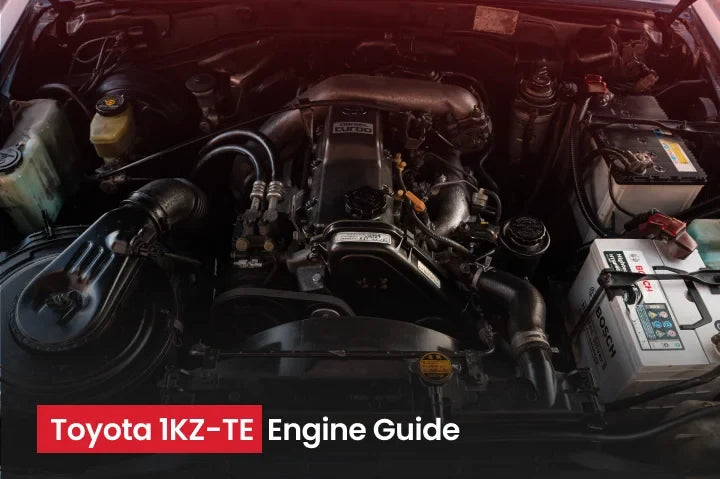
The Toyota 1KZ-TE is a 3.0L four-cylinder turbo diesel engine produced from 1993 to 2002. It powered the Hilux Surf, Land Cruiser Prado, and HiAce in Japan and Australia. In the US, it is best known as a popular swap candidate for the 4Runner and Tacoma. Here is the full breakdown of the 1KZ engine, specs, fitment, legality, and buying tips.
What Is the Toyota 1KZ-TE Engine?
The 1KZ-TE is the turbocharged version of Toyota’s 1KZ engine family. It uses indirect injection and a ceramic-tipped piston setup designed for longevity in off-road and utility applications. Toyota built it specifically for mid-size SUVs and vans where low-end torque mattered more than outright horsepower. The TE suffix in the name denotes turbocharger and electronic fuel injection.
It replaced the 2L-TE diesel in many markets and was succeeded by the 1KD-FTV in the early 2000s. The 1KZ-TE still has an active following in the US overlanding community because JDM units are widely available and affordable.
1KZ-TE Specs: 3.0L Turbo Diesel Power, Torque and Injection
Here are the core specs:
|
Spec |
Detail |
|
Engine type |
Inline 4-cylinder, turbocharged diesel |
|
Displacement |
3.0L (2982cc) |
|
Bore x stroke |
96mm x 103mm |
|
Compression ratio |
21.0:1 |
|
Fuel injection |
Indirect injection (IDI) with Toyota EFI |
|
Power output |
130 hp at 3,600 rpm |
|
Torque |
199 lb-ft at 2,000 rpm |
|
Turbocharger |
Water-cooled, intercooled |
|
Emission standard |
EURO 1 / pre-EURO 2 (Japan domestic) |
|
Production years |
1993–2002 |
The standout number is the torque figure. Nearly 200 lb-ft arriving at just 2,000 rpm means the 1KZ-TE pulls hard from low speed, which is exactly what you want in a heavy off-road SUV or a loaded van. Horsepower is modest by modern standards, but this engine was built for grunt, not speed.
Which Vehicles Had the 1KZ-TE: Hilux Surf, Land Cruiser Prado and HiAce
Toyota fitted the 1KZ-TE to the following vehicles:
-
Toyota Hilux Surf (4Runner equivalent) - 1993 to 2002, JDM and Australian markets
-
Toyota Land Cruiser Prado 90 series - 1996 to 2002, JDM and export markets
-
Toyota HiAce van - select years, primarily Australia and Asia-Pacific
-
Toyota Land Cruiser 78 and 79 series - some regional markets
None of these were sold in the US with the 1KZ-TE from the factory. The American 4Runner and Tacoma were gasoline-only. That is why all US 1KZ engines are JDM or Australian imports. The Hilux Surf is the most common donor vehicle.
1KZ-TE Swap Into a 4Runner or Tacoma: What It Takes
Swapping a 1KZ-TE into a third-gen 4Runner (1996-2002) or Tacoma is one of the more realistic diesel conversions available for these platforms. The engine physically fits and has been done many times by overlanders who want diesel torque and better fuel economy on long trips.
Key requirements for a successful 1KZ-TE swap:
-
Engine, matching manual transmission, transfer case, and ECU as a complete kit
-
Custom engine mounts or modified stock mounts depending on the donor vehicle
-
Diesel fuel tank and fuel lines compatible with diesel fuel
-
Intercooler and associated piping if not already included with the engine
-
Cooling system upgrades since the 1KZ-TE runs hot under load
-
Correct glow plug system wiring for cold starts
-
Exhaust fabrication to exit properly in the new chassis
Our 1KZ-TE kit includes the 3.0L turbo diesel engine, 4x4 manual transmission, and ECU in one package. Getting the transmission and ECU with the engine saves time sourcing parts separately. The manual gearbox is a direct advantage for off-road use and simplifies the overall conversion.
Is a 1KZ-TE Swap Street Legal? Emissions Rules by State
This is the most important question for anyone planning a 1KZ-TE swap in the US. The short answer: it depends on your state and the year of your donor vehicle.
Under EPA regulations, swapping an engine from a foreign market vehicle into a US vehicle constitutes tampering with the emission control system if the replacement engine does not meet the same or stricter emissions standards as the original engine. This applies regardless of engine age.
Here is how it breaks down by state type:
States with no emissions testing:
-
A 1KZ-TE swap is generally tolerated as long as the vehicle passes a basic safety inspection
-
Check local county-level rules since standards vary
OBD-II states with visual and functional emissions testing:
-
A diesel swap into a gasoline vehicle will fail a visual inspection
-
Inspectors check engine family codes and emission control devices
-
States like Virginia, Maryland, and Pennsylvania fall here
California and CARB states:
-
Any swap must use an engine from a vehicle of the same year or newer
-
The 1KZ-TE does not meet CARB standards for any typical swap application
-
No CARB EO exemption exists for the 1KZ-TE
The bottom line: if you live in a state without emissions testing and are building an off-road rig, the 1KZ-TE swap is very viable. If you are in a testing state, consult a local shop familiar with diesel swaps before purchasing.
Browse our full Toyota and Lexus engine lineup.
Common 1KZ-TE Problems: Head Cracks and Injection Pump
The 1KZ-TE has two well-documented issues every buyer should know about.
Head cracking:
The original cylinder head design had a weakness around the pre-combustion chambers. Under sustained high heat or repeated overheating events, the head can crack. Toyota issued a revised head design in later production units. If you are buying a used 1KZ-TE, ask specifically whether the revised head is fitted. JDM units from 1999 onward are more likely to have the updated head.
Injection pump wear:
The mechanical injection pump on early 1KZ-TE engines is known to wear out around 150,000 to 180,000 km. Signs include hard starting when cold, rough idle, and black smoke under load. A rebuilt or upgraded injection pump from a reputable supplier solves this. Budget for it if you are buying a high-mileage unit.
Other items to watch:
-
Glow plug failure, especially on units that sat unused
-
Intercooler hose cracking on older units
-
Timing belt wear; replace it every 60,000 miles regardless of condition
None of these are deal-breakers. They are known quantities, and a well-maintained 1KZ-TE with the revised head runs reliably for many years.
Buying a JDM 1KZ-TE Engine With Transmission and ECU
JDM 1KZ-TE engines come from Hilux Surf and Prado models. Japan’s vehicle inspection system forces early retirement of vehicles expensive to certify, so these engines often reach the export market with 60,000 to 100,000 km on them, well within service life.
What to look for when buying:
-
Confirm the head revision. Ask whether the updated cylinder head is installed.
-
Request mileage documentation with the import paperwork
-
Buy the ECU with the engine; the 1KZ-TE ECU is paired to the injection pump
-
Get the matching 4x4 manual transmission if you are doing a full drivetrain swap
-
Verify the intercooler and turbo are included and show no oil contamination
Our 1KZ-TE kit includes engine, 4x4 manual gearbox, and ECU together.
Toyota 1KZ-TE Engine FAQ
Is the 1KZ-TE reliable?
The 1KZ-TE is reliable when maintained properly and not run hot. The early head design is its known weak point; later units with the revised head are significantly more robust. Keep the cooling system in good shape, replace the timing belt on schedule, and address injection pump wear early. A properly maintained 1KZ-TE easily exceeds 200,000 km.
Can I legally swap a 1KZ-TE into my 4Runner?
It depends on your state. States without emissions testing generally allow it with no issue. OBD-II states that do visual inspections will likely flag a diesel swap into a gasoline vehicle. California and CARB states prohibit it outright. Check your state’s emissions rules before purchasing. The EPA considers a swap that reduces emissions compliance to be tampering, so always verify local law first.
How much horsepower does a 1KZ-TE make?
The Toyota 1KZ-TE produces 130 horsepower at 3,600 rpm in stock form. More importantly, it makes 199 lb-ft of torque at just 2,000 rpm. That low-RPM torque is what makes it well-suited for towing, off-roading, and loaded overland travel. Light tuning and an intercooler upgrade can push output higher without major reliability concerns.